
So, you’re thinking about setting up an online business so that you can work from anywhere and see the world? Well, that honestly sounds like the dream! It’s great being your own boss and having the flexibility to move around when you need to, but it can be a long road to get set up and feel stable enough to travel at the same time.
However, having lived and worked all around the world and having a successful online business, I’ve been there and done that. I know all the best tips and tricks for setting up a business online, including all the little things you might forget about (hello, taxes!).
So, I’ve created this complete guide. It includes:
- The most popular online business types
- How to make passive income
- How to set up your finances for your online business
- How to legally work from anywhere
- How to promote your new online business
- Tips for successfully being your own boss
As I mentioned, it’s the ultimate guide for setting up a business online! So, without further ado, let’s dive in and find out more.


Choose an Online Job: 11 of the Most Popular Choices
First things first, you need to figure out what kind of online job you want to do. As it’s your own business, we’re not looking at remote roles for existing corporations; these are self-employed positions that you can build your business around.
Think about your existing experience and skillset and see how you can market it to help other people. Even if you think it’s too niche, there will likely be someone out there looking to hire an expert!
1. Virtual assistant
If you’re super organized and have experience as a receptionist, executive assistant, or administrator, you could start an online business as a virtual assistant.
This role is pretty much exactly the same as an in-person executive assistant, except you don’t have to be physically on hand, which gives you a lot more flexibility.
You’ll organize meetings for your bosses, make sure their emails and diaries stay up to date, manage the administrative side of their lives, and answer calls through a virtual phone forwarding system. I’d recommend using a cross-platform system like Calendly to manage appointments, meetings, and bookings.
While this is a job you can do from anywhere, you’ll need to be operating in the same or a similar time zone as your client. You’ll also need a VPN and phone system that allows international calls without breaking the bank if you’re going to work from overseas.
Depending on how many hours your client needs, you could be a virtual assistant for a couple of executives. This can help you fill out your role to more full-time hours, or you can enjoy the increased flexibility.
2. Freelance Creative
One of the most common online businesses that allows you to work from anywhere is being a freelance creative. This is a job that demands a lot of hustle, as you need to continuously ensure you have enough clients and projects.

This is usually referred to as a “feast or famine” landscape, where you either have too much to do or nothing at all.
Freelance creative jobs include writers, editors, graphic designers, web designers, videographers, photographers, and more. To find projects and gigs for these kinds of roles, you need to build up your portfolio.
Use WordPress to build a portfolio website, and you can use sites like UpWork to find gigs from all around the world.
UpWork does take a percentage as a fee, but you do have inbuilt security methods and mediation to try and prevent scammers from stealing work without paying. You can also find gigs on LinkedIn and sites like Freelance Framework.
3. Content marketing
If you have a background in marketing, you can build a remote business around content marketing and paid advertising. This can revolve around building brand strategies, managing websites for small businesses, or running email campaigns for other companies.
Many businesses look for content marketing agencies or freelancers to help them organize their efforts, without having to commit to a full-time member of staff. As most marketing revolves around being online, it definitely pays to have experience here and stay up to date with the latest trends.
Most of the time, the businesses hiring will be small businesses or start-ups; however, sometimes bigger corporations will have extra projects that you can jump onto. Again, UpWork and LinkedIn are great places to look here.


4. Photographer
If you’re handy with a camera, being a photographer can be a lucrative online business. While you’ll likely be a freelancer, plenty of brands need high-quality imagery to help promote their businesses.

As a digital nomad, you can often take photos for the places you’re staying in return for board, or you can negotiate a mix of payment and accommodation in some spaces. You can be a commercial photographer, or be a bit more artistic and editorial for magazines and newspapers.
If you’re getting started and want some passive income, upload some of your images to a stock website like Shutterstock. You’ll get paid every time someone downloads your image.
Of course, this means that you have limited control over where the image is used, but you can earn a decent amount if you upload a good amount of high-quality images in a high-traffic search term.
5. Developer
Realistically, being a developer was one of the original digital nomad or remote worker jobs. It’s also one of the most lucrative positions you can get. Given that developers often work solo or in small remote teams, it makes sense that you can work from anywhere.
As long as you have a stable internet connection and a powerful enough laptop to do your tasks, being a dev is a great self-employed option. As everything is online and businesses are launching more websites and apps, there’s always a need for developers, especially on a project-by-project basis.
Developers can often set up retainer rates, as apps and sites will need updating with new releases and versions over the years. Finding a few core anchor clients as well as temporary projects can really set you up.
Again, you need a decent portfolio, and it helps if you can speak a few different coding languages for versatility.
6. Language tutor
If you know more than one language, or just know one particular language extremely well, you may be able to set up a business as a language tutor. There are numerous websites online that connect language tutors with learners around the world.

You can build a profile, show your competencies, set your rates, and block out your calendar accordingly. All the lessons are done over video conferencing, so you can be anywhere in the world.
It definitely helps if you have a teaching qualification like TEFL or TESOL, or if you have a degree in the language, but it’s not a prerequisite. However, you can likely charge more and find more success if you have one of these qualifications.
While this is a great online job, you’ll need to have several clients to make this viable as a full-time role. Hourly rates can vary wildly, and while your hourly rate will be more than a standard by-the-hour employed role, you need to account for the fact that you’ll likely be working fewer hours.
I‘ve lived abroad for many years and love helping others find work abroad and figure out their “Move Abroad Plan.” Check out my class below to get you started ASAP!


7. Online coach or consultant
If you have demonstrable experience in one particular area, then you could make a living as an online coach or consultant. This can be anything from being an online personal trainer to a consultant about accounting and business operations. The world really is your oyster with this online business model.
For example, part of my online business is helping people with how to move abroad. This involves setting up courses, making additional materials and worksheets, and doing one-to-one consultations to actively help people achieve their dreams of living abroad.
I’ve even made a downloadable coaching template to help people build their social media engagement and boost their business. It’s all about leveraging your existing skills to help other people and businesses.
This one does take a lot of motivation and promotion of your business and services. You can’t coach people if they don’t know about you and your background. You have to build trust, your reputation, and lay out why they should trust you with their money and business.
8. Social media marketing
Similarly to content marketing, you can set up an online business doing social media marketing for other brands, businesses, and influencers. Social media is huge money now, and it’s always changing, so it’s important to get someone who actually knows what they’re doing.
There are hundreds of businesses looking for either freelance help with their social media or contract-led work.
If you have a good portfolio of social media work that includes creative assets, data around engagement and KPIs, and the impact your social media work has had on the business, you can leverage your skills and run your own business.
I’d recommend investing in a Later subscription so that you can schedule posts in advance and keep track of all the key metrics that clients love.
You can also set up your Instagram and TikTok clients on ManyChat so that you can automatically send followers links and downloadables, upping your engagement and getting those numbers sky high without manually replying to hundreds of comments.
Set Up Passive Income Streams for Your Online Job
Of course, we’d all like to earn more without actively having to do any work. It frees up our time to enjoy life and explore different projects and opportunities.
While you might not be able to live entirely off passive income, it can be a great way to supplement your earnings and help you save and invest for the future.
Affiliate marketing
One of the most popular passive income streams is affiliate marketing. This is where you add referral codes to your website, social media links, and more.
It doesn’t cost you anything, but you’ll get a percentage commission of anything that’s bought through your link.
There are a few different platforms that amalgamate different affiliate marketing programs into one central hub. This makes it easy to get started, rather than having to manually sign up for a dozen individual companies’ referral programs.
- Travel Payouts is one of the most popular affiliate marketing platforms for travel, outdoors, and work abroad content. It includes brands like GetYourGuide, Booking, Omio, VRBO, Hostelworld, and more.
- Impact Referrals has a wider range of companies, including beauty sites, retail, subscription services, and more.
- Rakuten Affiliate is also similar and has a huge range of affiliate marketing programs under its umbrella.
The most popular way to share affiliate links is through written blog or newsletter content. Talk about products or services you like using anyway, and then find the affiliate links for them. If you’re being honest and speak with authority, people are likely to trust your insight and click through to the link.
Many of these referral programs have minimum cash-out amounts. For example, you need to earn $50 on Travel Payouts before being able to transfer your money out, and on Impact, it’s just $10.
This can take time, especially if you’re just setting up your online business. Commission amounts vary, and it’s usually a small percentage, but it definitely adds up over time.
The benefit here is that once you write the piece or upload the video and link, you can promote it or let the algorithms do their thing.
Creating courses
One of my favorite ways to create passive income is by creating courses. I do this fairly regularly alongside my active coaching services. You can use sites like Teachable to create video or text-based courses to share with your followers or clients.
Here’s my course on how to move abroad:


You can put these behind paywalls and allow people to purchase pre-recorded course content. The subject matter can be whatever you want as long as you’re an authority on it. You’d be amazed at some of the niche courses on these sites that actually do really well!
Once you’ve recorded the course the first time, you can upload it, and then you don’t have to be physically on hand to deliver it. Of course, you can spend time actively promoting it on social media or on your newsletter, but people will be able to organically find it on these sites as well.
Selling guides and downloadables
Another great passive way to get repeat sales from content you’ve already created is by selling guides and downloadables. If you’re running courses or writing blog content, chances are that you’ve got checklists, templates, and guides to sell.
Here’s an example of a digital product I created and now sell on Etsy:


Some creators sell guides directly on their website. This can be stuff like a beginner’s guide to online business or what you need to know about being a digital nomad in 2025.
They tend to be a few pages long and professionally designed up in either InDesign or the more beginner-friendly Canva setup. They have to look polished, after all, people are paying actual money for them.
If you’re selling downloadables, you can also sell them on marketplace apps like Etsy. This way, you get traffic that’s not directly associated with your brand.
I have a few templates and downloadable packs on Etsy at the moment:
Substack newsletters
While this isn’t completely passive, it can help as an extra income stream. Substack is a platform, sort of like Patreon, where you can subscribe to your favorite creator’s content. At regular intervals, subscribers receive written newsletter content that’s exclusive to subscribers.
These might be tips that you reserve for paid courses or first-look information that you won’t find anywhere else. While you do have to write and schedule the newsletters, you can use content from other income streams like courses, downloadables, articles, and more.
Rental income
If you’re moving overseas or planning on being a digital nomad as you start your online business, consider renting out your space. If you’re in a position to own your own home and be able to hold onto it to travel, you can rent it out and receive passive income.
This can cover any mortgage payments plus a little extra for rental management companies, if you’re on the other side of the world.
It always pays to have a home base just in case, and if you already have a decent asset like this, you could be making passive income from it. The same goes if you’re able to sublet your rental, or if you even have a parking space in a popular area that you can rent out.
How to Set Up Finances for Your Online Business
One of the biggest struggles that people have when they’re setting up their new online business is figuring out the financial side of things.
After all, you know your own abilities and specialties to sell them, but working out how to pay your taxes overseas and incorporating your business can feel like uncharted territory. However, it’s all necessary for creating a successful and legal long-term business.
Incorporating your business
First things first, you need to actually incorporate your business. This isn’t as scary or as complicated as you might think. You need a name for your business and an address.
It can be your home address, or you can pay for a virtual office address. These are popular for digital nomads or people who don’t want clients knowing where they live, as business records are often public.
You’ll need to pick the country and/or state where you want to incorporate your business. There are better benefits in certain states when it comes to corporate taxes and subsidies.
However, there are also residency restrictions to contend with. Whether your business is registered in the US or not, as a US citizen, you’ll still have to pay taxes to the IRS as an employee, so remember that if you’re trying to incorporate overseas.
You can set yourself up as a sole trader or a limited company. Sole traders are your standard self-employed people, where your business and personal income are essentially one and the same, and if you get sued, they can come after everything.
However, it’s a lot easier to manage if you’re not investing in an accountant or business manager.
Limited companies separate you from the business, and you become an employee of your business. This means you can structure it in a way to pay less personal tax, and you can separate your business and personal assets in case of a lawsuit. However, it can be more complex to run.
Business credit cards
One of the cool things about running your own business is that you become eligible for a lot of different credit cards. Business credit cards tend to have a lot more benefits to them, even if they come at a higher annual fee.
However, as it’s a business expense, you can write off the annual fee against your taxes.
My two go-to business credit cards that have a ton of travel-related benefits are:
If you’re planning on working from anywhere, you’re going to spend considerable money on travel. These cards build up reward points specific to sectors like travel, restaurants, car hire, Uber, and more. You can get huge bonuses for spending as you usually would.


These cards also have great welcome bonuses that can help you get on your way to your first overseas destination. While the initial outlay may seem steep, many of these pay back their initial fee with the welcome bonus.
This usually means you need to spend a certain amount within the first three or six months, but starting an online business can be expensive, so it’s best to sign up before you start investing in web hosting, subscriptions, or flight tickets.
Sorting out your taxes
As the old adage goes, there are only three things in life that are constant: life, death, and taxes. If you’re a US citizen, you still have to pay your taxes to the IRS, even if you live overseas.
The deadlines are slightly different, and the process can be confusing, so I use MyExpatTaxes for everything. It makes it super simple and ensures I don’t get angry letters from the IRS.
If you’re working overseas, you may have to pay some taxes locally. This depends on the country, your visa, and your situation.
For example, the digital nomad visa in Georgia (the country in the Caucasus, not the state in the South) specifies tax-free status on earnings while you’re there. That’s a huge part of the draw.
Many US nomads end up paying double tax if they stay in one place too long and have to get either digital nomad visas or temporary residency visas. Do your homework before you commit!
Working from anywhere
Part of the joy of having your own online business is that you can usually work from anywhere you please. However, there are a few aspects that you need to consider before booking that open-ended flight ticket.
Digital nomad visas
In the wake of the pandemic and an increase in remote workers, many countries have specific digital nomad visas. They all have their own requirements, the most important usually being the monthly minimum income amount.
Some countries, like Iceland, have it as high as $10,000 per month. However, most have it between $2,000 and $4,000 per month, pre-tax.
They also vary in duration. Sometimes it’s around six months, and others, like Bali’s, are up to five years. These visas legally allow you to work in these countries, as long as you have income coming in from overseas.
If you’re living in Bali, for example, and exclusively work for Indonesian companies, that’s not going to work. Some countries have a maximum percentage of clients that can be from the country you’re staying in.
This is to stop people from applying for digital nomad visas when they should be getting sponsored work visas.
Some countries also have self-employed visas, which might be more suitable for your needs. You’ll need to show a business plan and some of your existing contracts to prove that you can support yourself.
Crucially, you are not supposed to work, remotely or not, on a tourist visa. Some people chance it, but legally speaking, you shouldn’t be doing this.
VPNs
If you’re living and working overseas, it can be useful to invest in a VPN. Certain countries have restrictions on certain sites, and you might just want to be able to access live sports or Netflix from home.
NordVPN is my VPN of choice and helps me stay connected no matter where I am in the world.
It can really help if you’re working for international companies on the go, as you can change your virtual location to access content from different countries. Also, some videos and news websites aren’t available overseas.
For example, you can’t access the Chicago Tribune in the UK. However, with a VPN, you could change your virtual location to the US while you’re sitting in a cafe in London and read your local paper from back home.
Co-working spaces
Finding somewhere to work comfortably overseas can be tricky. You might be able to find an Airbnb or homestay with a desk and office-style setup, but these can come at a premium.
There’s also the option of setting up in a coffee shop for a day. However, this can be noisy if you have meetings, and it relies on you constantly buying drinks and the place not getting too swamped.
In many global cities, you’ll be able to find a co-working space. You can get day, week, or month passes to most of them.
There are usually banks of hotdesks, a kitchen with tea and coffee, and a series of smaller meeting rooms or soundproof call rooms that you can book out in advance.
The rates vary depending on the company, but you also get access to speedy WiFi, printers, and scanners, and there are sometimes social events for the members.
If you’re going to be in one place for a while and want to meet like-minded people, co-working spots are a great place to do so. You might even pick up an extra client or two!
Time zones and team calls
Remember, before you go jetting around the world, that you need to be aligned with some of your clients. Depending on the parameters of your client contracts, you may need to be available for meetings between core hours in a specific time zone.
If you’re a virtual assistant, for instance, you may have very specific hours that you need to keep. While this doesn’t mean you need to adhere to the same time zone as your client, you need to be prepared to be alive and awake during those hours.
Recently, there have been a lot of EST hour workers heading to Europe and enjoying the benefit of working CET. This is because 9 am EST is 2 pm CET, and 5 pm is around 11 pm.
People can enjoy their slow European mornings, hop onto work after lunch when everything is usually closed (especially in the Mediterranean countries), and work through to the evening.
As dinner and evening entertainment start a lot later in Europe, it’s not uncommon to have dinner at 9 or 10 at night. That means no one is going to properly out until way after midnight. And then you don’t start work til 2 pm again, so you can continue the cycle!
Promoting yourself
One of the downsides of running your own business is the fact that you have to promote yourself. No matter what business you’re in, you can’t expect people to find your services by accident. You need to be proactive here.


Social Media
Arguably, the best place to build your business’s brand is on social media. Whether your brand is yourself or you want to keep your anonymity behind cute Canva graphics, it’s important to have a presence that people can look up.
You can share what you do, how your services work, and cool testimonials and wins. Follow similar businesses to yours and see who they’re following too. You’ll get a lot of crossover that way.
You don’t have to constantly be online to do this. Set aside a day a month to schedule everything on Later, and set up ManyChat for replying to standard comments and requests. This way, it’s a lot more manageable and not as stressful.
Look, I know we all dislike LinkedIn, but as a business owner, you can’t afford not to be active here. Even just commenting on a few posts a week and sharing a few cool updates from the week is enough to get started.
Here’s my LinkedIn page for reference:
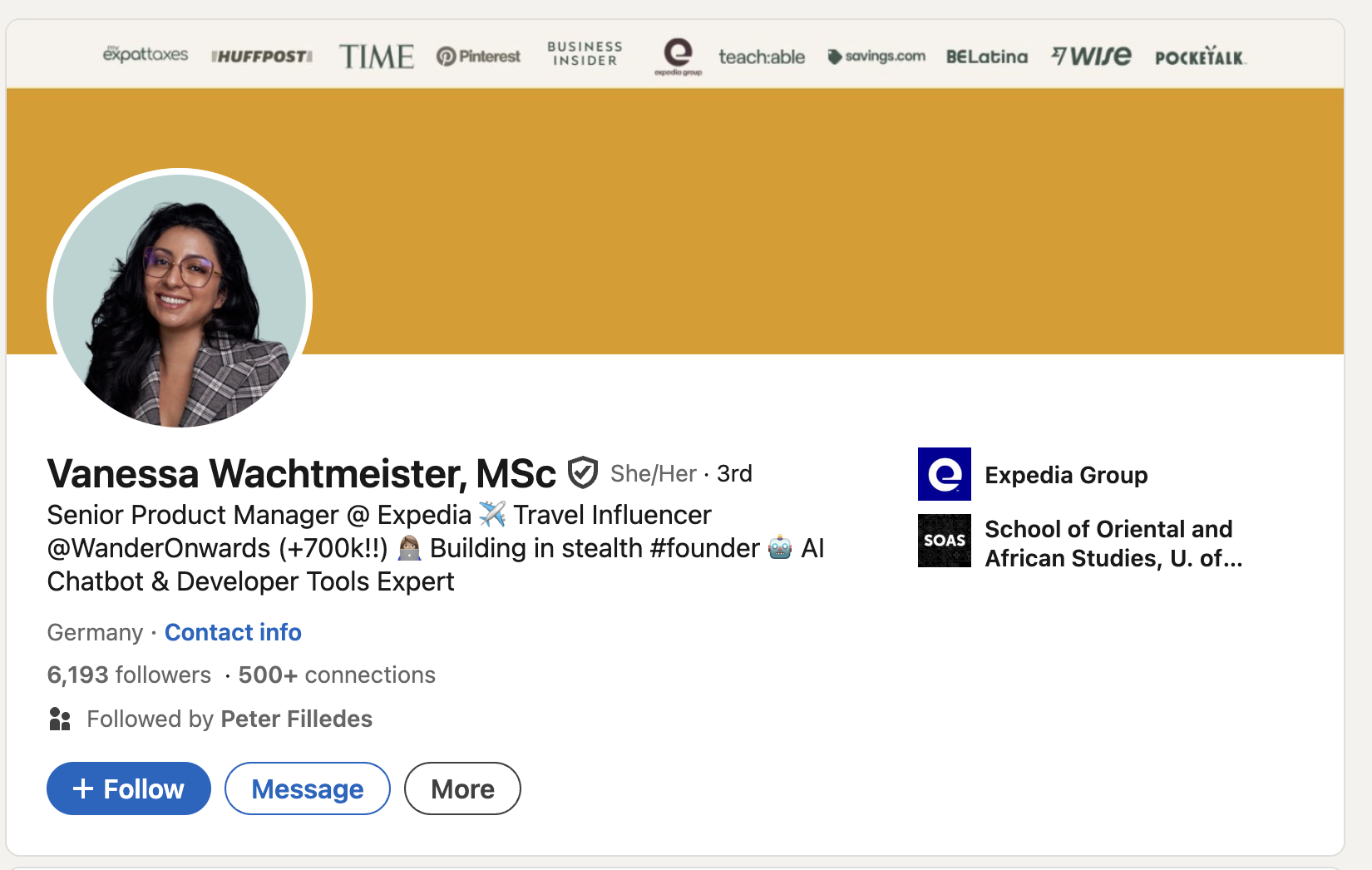
LinkedIn doesn’t really have any major hacks that you can use, unlike TikTok and Instagram. Instead, it seems to prioritize longer comments on posts and regular updates. Make sure all your profile fields are up to date and list your services as a pinned post.
You can also pin your portfolio and any great testimonials. When you ask clients for testimonials, you can also give them the option of endorsing your skills on LinkedIn. This is a lot less time-consuming for people and gives you public clout.
Networking online and in-person
Despite being an online business, you might occasionally have to network in person. Networking, whether online or in-person, is a key way to get clients, get your name out there, and make connections that might be useful down the line.
LinkedIn has a ton of community groups that you can join, and I’d recommend finding groups at co-working spaces or on digital nomad Facebook groups in various cities. Running an online business can be lonely sometimes, too, so there’s a social element to networking that is a huge plus.
For example, there’s a small WhatsApp community dedicated to female freelance writers under 30. There are women from all around the world and in various stages of their careers in this group, and people just put their questions in the group chat or share their wins. Networking doesn’t have to be a scary room full of suits!
Reaching out
To promote your business, you’re going to have to make the first move. As in dating, this can be scary and vulnerable, but it’s unfortunately necessary. Reach out to brands you actively follow on social media and see if they need a helping hand.
A lot of the time, you might get ghosted or turned down, but it’s a numbers game. Remember not to take things too personally – it’s business and you need a thick skin!
Don’t be scared to message other people doing what you’re doing as well. Asking for support or advice is completely fine to do, and most people will want to help. We’ve all been in the starting out point before!
Tips for Being Your Own Boss
Being your own boss definitely has its perks, don’t get me wrong, but there are some downfalls. With no boss breathing down your neck, it’s up to you to stay motivated and not sneak off to the couch to watch Netflix instead of doing your necessary (but dull) admin. Here are some tips for being your own boss.
Keep a schedule
Even though flexibility is a perk of running your own online business, it’s important to get into a solid routine and habit. While it doesn’t have to be 9-5 Monday to Friday, make sure you have a solid amount of hours dedicated to your desk each week.
If you don’t have many projects on, use the extra time to build your brand, promote yourself, or look into building assets for passive income. As a business owner, there’s always something else to do, even if you don’t have client work.
Saying that you’re going to try to hit 32 hours a week is a decent goal if you’re doing this full-time. Working remotely, you tend to work quickly as there are fewer distractions and pointless meetings.
This still gives you plenty of flexibility, but knowing that you want to work 8 hours four times a week or 8 hours three days and two half days, helps you plan out your workload moving forward.
Make time for yourself
When you’re starting to build your online business, the first few months are going to be stressful. You’ll be scrambling for clients, trying to build your portfolio site, set up invoicing and accounting, and wondering why you’re doing this on a daily basis. However, it gets better with time.
It’s important to make time for yourself. Log off after a specific time, keep two specific days free, or go for a walk at lunchtime. If you don’t, you’ll burn out, and because you’re spinning all the plates, it’ll happen quickly.
Don’t forget about admin time
Everyone always forgets to account for admin time when running an online business. This is time that you don’t actively get paid for, but includes necessary tasks like emails, invoices, outreach, social media promotion, and updating your portfolio.
When you’re working out your capacity for new projects, remember to block out a few hours per week for admin and don’t overfill your schedule. The temptation is to say yes to everything, but if you do, you’ll fall behind on the admin and your books, and the backend of your business will get messy quickly.
Back yourself and your rates
As a business owner, you get to set your own rates. This is one of the hardest things to do as a self-employed person.
You’ll have hourly rates, day rates, project rates, and even rates per article or social media post. It’s a lot. Usually, your hourly rate is your most expensive, and then you give a slight discount for a day rate, and another discount for a larger project.
A good idea is to research the going rates for your services. There will be a huge range, usually, and then you have to look at your experience level against your competitors. You need to balance paying yourself what you’re worth and remaining competitive in alignment with your experience.
A friend of mine says type your first hourly rate in, which is your instinct, and then add another $5 or $10 to it. Back yourself. We tend to undervalue ourselves in case we’re asking too much. Clients will soon tell you if you’re too expensive.
You also need to remember you’re charging pre-tax rates and you have to account for your unpaid admin time and the fact that you have no job security or benefits, which is what the company would have to pay for an employee. Factor this into your quote.
Trust your gut
If a project sounds too good to be true, it probably is. There are a few gigs that are like unicorns, but there are also a lot of projects out there that are a bit of a scam. Protecting yourself by using platforms like UpWork or Fiverr can help, but your gut is the best judge.
If someone is paying way above the going rate, it’s usually a scam, a short deadline, or the client is very demanding, in my experience.
As you pitch for work, you’ll see some red flag phrases in job descriptions, like “looking for someone who goes above and beyond and uses initiative”, or “wants to join a kick ass team full of top level go-getters”.
Both of these usually mean that they want you to work longer and do things that are outside the scope of the project without additional compensation.
Don’t be afraid to call a client out, either. If they’re pushing work that wasn’t agreed on or they’re being unreasonable with deadlines, address it sooner rather than later.
Most people don’t realize they’re doing it, or if they do, they don’t think they’ll get called out. Your time and expertise are your money; don’t let people take advantage.
Set reminders for everything
With all those spinning plates, you need a robust way to keep on top of your tasks and projects. I used Trello for my tasks and tracking when I’ve been paid or not. I also have a weekly desk planner where I keep track of what projects I’m working on each day, to keep me motivated.
You’ll have various deadlines and clients with different invoicing timelines and protocols, so set reminders on your phone or email calendar to make sure you don’t miss any deadlines.
If you miss an invoicing deadline with some companies, you have to wait another 30 days to be paid, and when you have to pay rent, that can be a killer.
Vanessa Wachtmeister is a travel tech professional and the creator of the wealth & wanderlust platform, Wander Onwards. Vanessa is originally from Los Angeles, California, she is a proud Chicana, and she has been living abroad for the last 9 years. Today, she helps people pursue financial and location independence through her ‘Move Abroad’ Master Class, financial literacy digital products, and career workshops.