
It’s difficult to name an industry that isn’t being transformed by AI. Whether you love it or hate it, the reality is that people who learn to use it will outpace the people who don’t. You need to upskill your AI knowledge quickly.
The best AI courses for working professionals in 2026 can be found on Coursera. Start with Introduction to Artificial Intelligence for complete beginners and AI Foundations for Everyone before choosing a specialization built for your industry.
Coursera has specific tracks for healthcare, education, engineering, marketing, finance, and law. Many of these AI courses take between one and three months on a part-time basis and include a shareable certificate upon completion.
So, which are the best AI courses for working professionals, and how can you choose the right ones for your career path? In this guide, we’ll dive into the different options, the ethics of AI courses, and discuss why AI skills matter in 2026. Let’s find out more.
Why AI Skills Matter for Your Career in 2026
AI skills matter for your career more than ever. An AI Skills Report by Pluralsight found that 95% of organizations now use AI skills as a hiring factor. That’s huge.
The same report also found that 65% of businesses have had to abandon AI projects due to a lack of in-house skills. So, if you can use AI, you’re going to be in high demand.
Historically, businesses have shifted which skills are desirable every few years. For example, Excel literacy used to be a skill that set you apart from the crowd. AI literacy is now becoming a baseline professional skill, just like time management or being able to use Microsoft Teams.
So, if you’re looking for a job abroad or you’re pivoting careers, having an AI certificate on your CV is one of the cheapest credibility signals you can buy. There are plenty of quick courses, and they can really set you apart from other candidates.
The job market has been highly competitive lately, so if you want to stay relevant in the age of AI, these courses can bolster your application.
AI skills for work are going to become an essential criterion in job descriptions, rather than a desirable one, in the next few years, so stay ahead of the curve by doing AI courses online.


How to Choose the Right AI Course
Choosing the right AI course can feel like a minefield, but it’s easier than you think. Here’s a quick decision framework to help you figure out the right AI course for you.
- If you’re a total beginner → start with a foundations course
- If you’re a manager or leader → opt for a strategy-level course, with no coding
- If you’re not a beginner and not a manager → pick the specialization for your industry
- If you want to go deeper into governance and ethics of AI → choose the responsible AI courses.
All of these course categories are on Coursera. This is an online course platform that is completely audit-able, part-time friendly, and comes with certificates upon completion. Let’s dive into the beginner-friendly options that you can find on Coursera first.
Start Here: Foundational AI Courses
If you’re looking for AI courses for beginners, then you need to start with the basics and foundations. On Coursera, there are two key foundational AI courses that I’d recommend.
Introduction to Artificial Intelligence
Introduction to Artificial Intelligence is absolutely the best course for complete beginners. If you’re looking for your first AI-related course, this is the one for you.
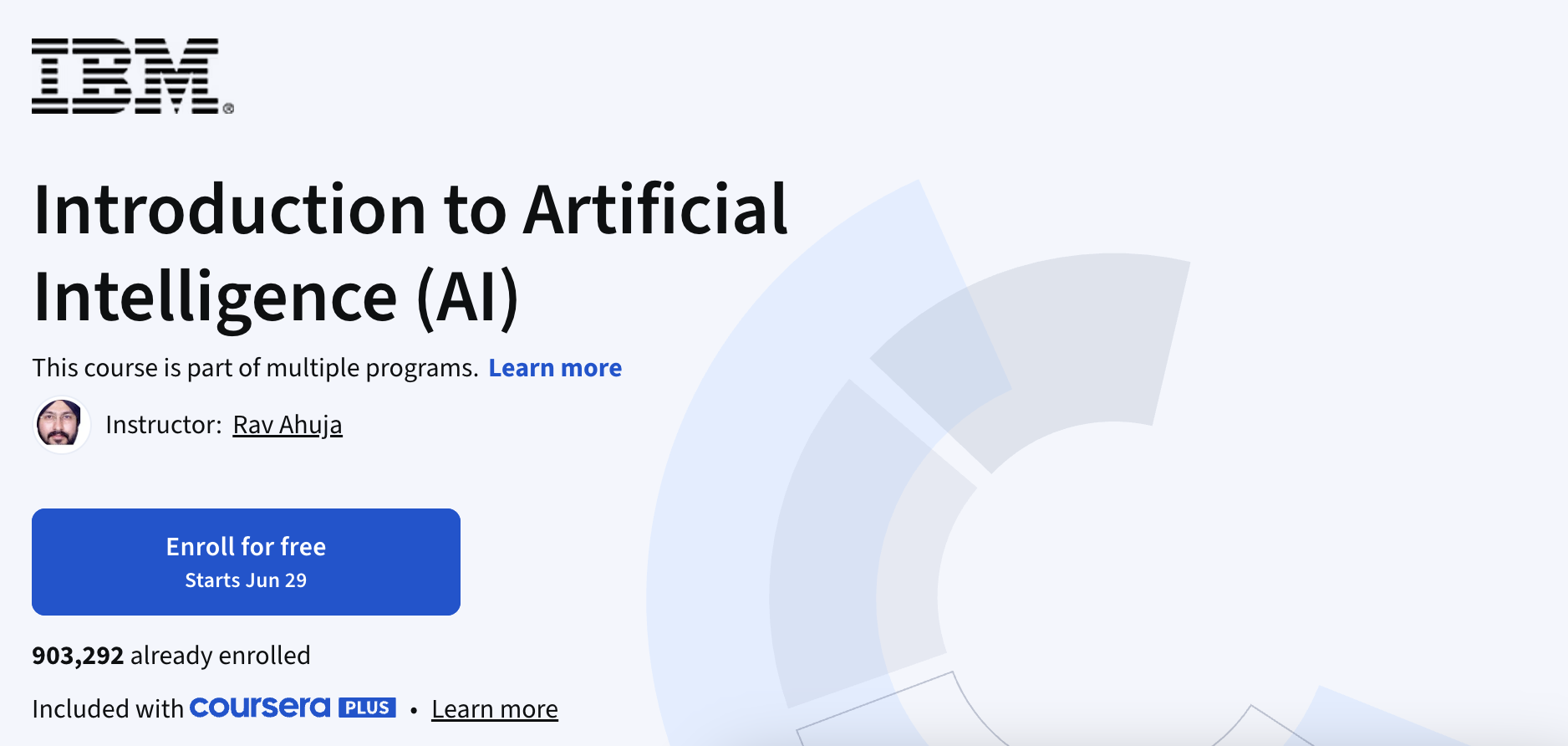
During the course, you’ll discover what AI is, what it can and can’t do, and all the main key terms, such as machine learning, generative AI, and LLMs.
This course will give you a basic understanding of AI and the different forms it takes in businesses. Essentially, this course is for complete AI novices who want a strong fundamental base to learn about AI. At the end, you’ll be able to have a basic conversation about AI with an authority and have a certification.
AI Foundations for Everyone Specialization
AI Foundations for Everyone Specialization is a course for non-technical professionals who want a fuller base knowledge of AI. This course is for all specializations, as long as you’re not in a technical role.
This course gives you a greater understanding of AI and even shows you how to build a simple AI chatbot without code, so there are some more practical elements here. The outcome of the course is that you’ll feel comfortable speaking confidently about AI at work, and, of course, you’ll get a certificate.
For Managers & Team Leads
If you’re a manager or a team leader, then you’ll want a slightly different AI course. After all, you might not need to know all the fundamentals, but you’ll need to know how best to use AI to meet your strategic goals.
Agentic AI and AI Agents for Leaders Specialization
For leaders and managers, Agentic AI and AI Agents for Leaders Specialization is the course you need. In 2026, the discussion around AI agents is a major one. This course is aimed at leaders who are trying to decide how to deploy agentic AI in their teams, rather than being aimed at engineers.
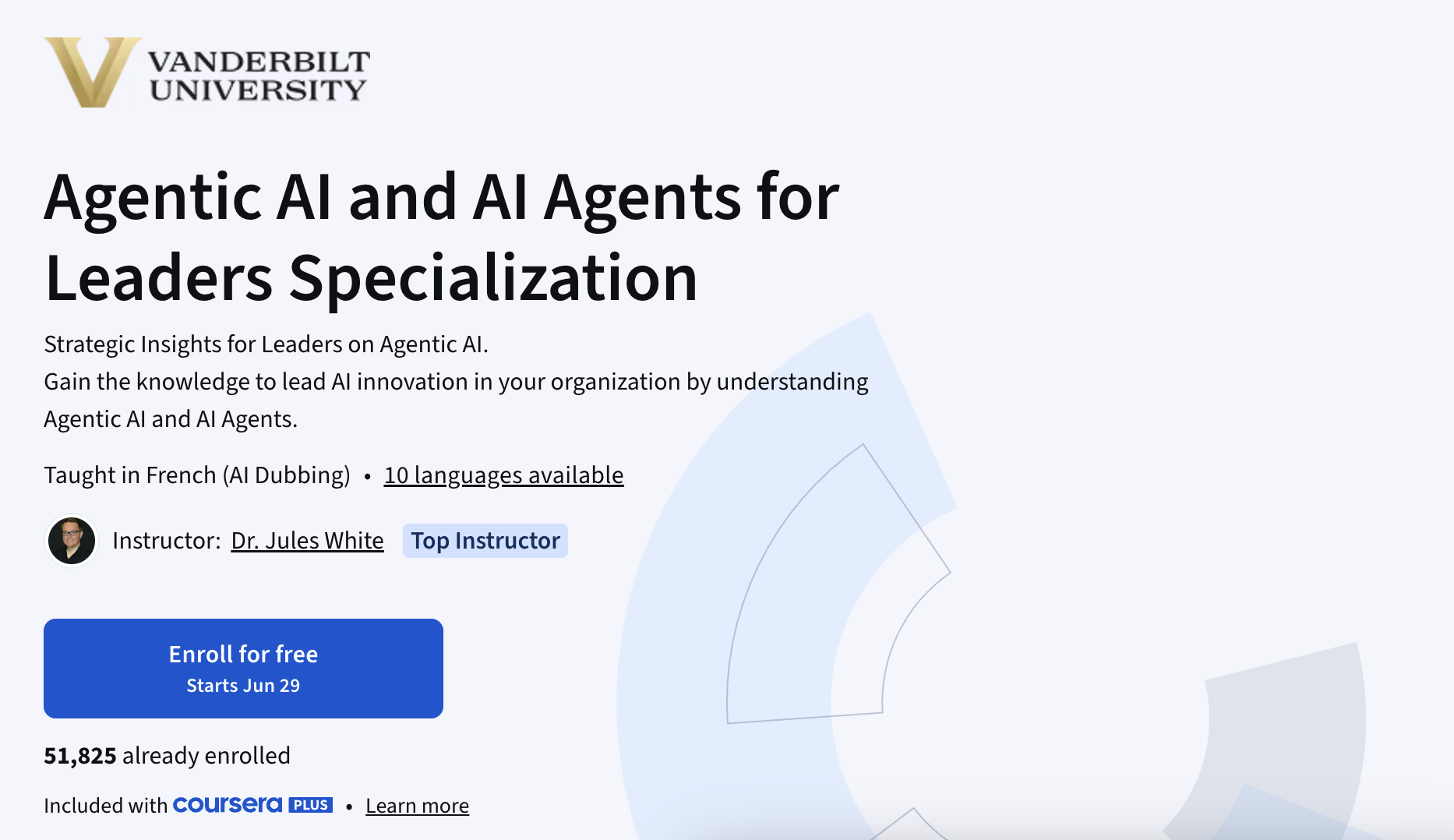
This course is great for leaders who are managing people or running their own business. It shows you the practical applications of AI and is specifically developed for managers and strategic thinkers, rather than team members or engineers.


Best AI Courses for Working Professionals by Industry
So, if you’re looking at how to upskill in AI in your particular industry, you’ll need a niche course. Luckily, Coursera has plenty of AI courses that are industry-specific. Here are the best AI courses for working professionals in specific industries, and who they’re best for. Let’s dive in and find out more.
AI Courses for Healthcare Professionals
If you work in healthcare, then the AI in Healthcare Specialization is a great course to check out. It’s run by Stanford University Online, it’s classed as a beginner course, and is ideal for clinicians, nurses, and health administrators. Overall, it takes around four weeks to complete if you’re doing 10 hours a week.
During the course, you’ll learn how to:
- Identify problems healthcare providers face that machine learning can solve.
- Analyze how AI affects patient care safety, quality, and research.
- Relate AI to the science, practice, and business of medicine.
- Apply the building blocks of AI to help you innovate and understand emerging technologies.
The outcome is that you’ll have a situational-specific understanding of how AI can work in the healthcare sector and a certification from Stanford University Online, one of the most prestigious colleges in the US.
AI Courses for Teachers
If you’re working in education, then you should check out Artificial Intelligence (AI) Education for Teachers. This beginner AI course covers things like classroom AI use and AI literacy for students. It’s a super short course and can be done in just two weeks if you do 10 hours per week.
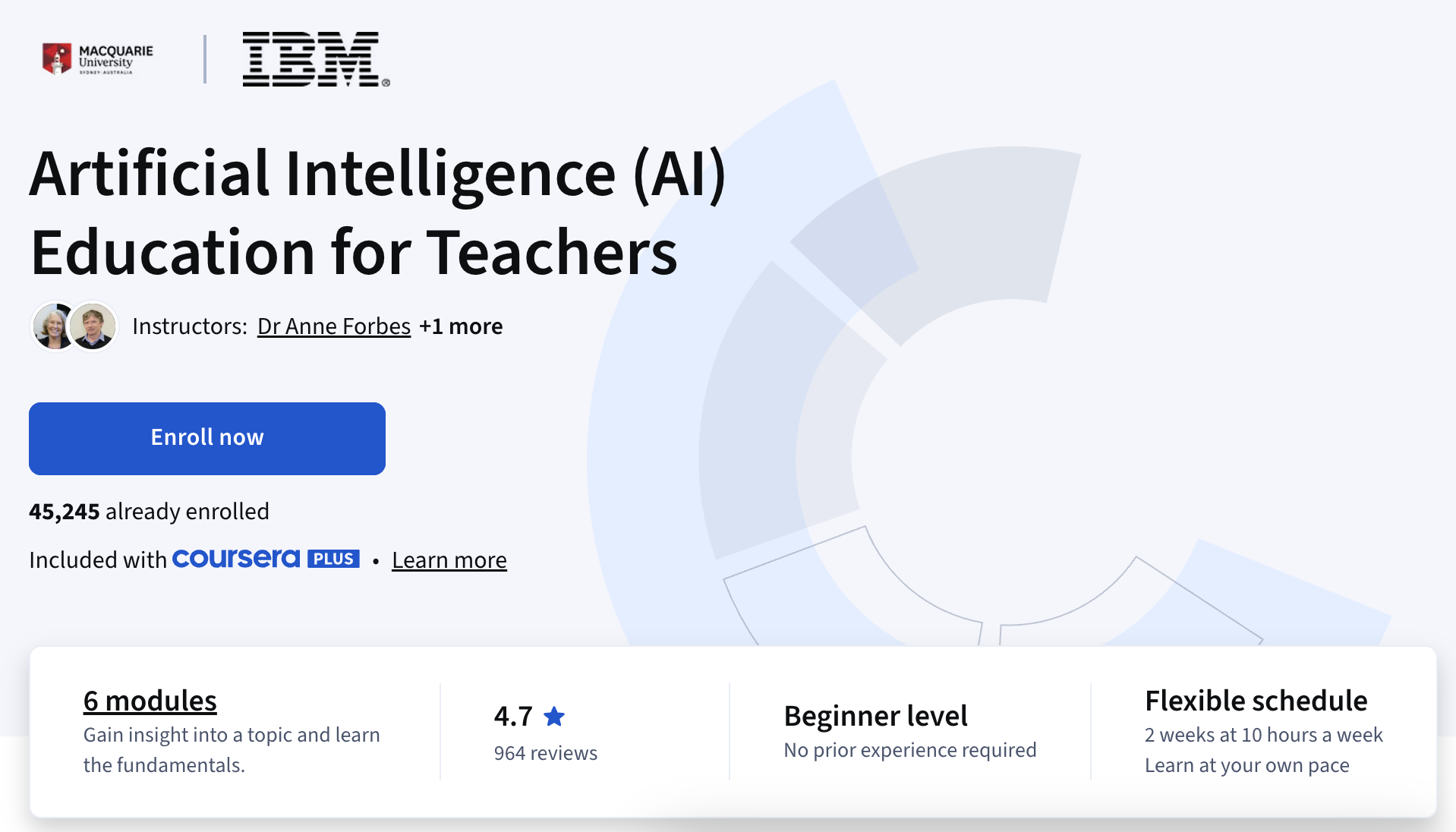
During the course, you’ll learn how to:
- Compare AI with human intelligence, broadly understand how it has evolved since the 1950s, and identify industry applications.
- Use creative, critical, design, data fluency, and computational thinking for AI.
- Explain ethical AI development: fairness, transparency, privacy, and compliance.
- Describe how thinking skills embedded in curricula can be used to solve problems where AI has the potential to be part of the solution.
This course is offered by Macquarie University in Sydney, which is in the top 1% of universities in the world. You’ll come out with a certificate and a greater understanding of the impact and uses of AI in the educational world.
AI Courses for Engineers & Scientists
Of course, AI is going to have a large impact on engineers and scientists. To get a basic grasp on these implications, check out Applied AI for Engineers and Scientists: Foundations Specialization.
This beginner course, offered by the University of Glasgow, takes four weeks to complete if you’re doing four hours per week.
During the course, you’ll learn how to:
- Build practical MATLAB skills for AI.
- Learn evolutionary algorithms and machine learning methods, and apply them to real-world science and engineering problems.
You’ll come out with a more practical understanding of how to use AI in engineering and basic scientific endeavors. This course is more practical than a lot of the foundation courses, so it’s definitely worth it.
I‘ve lived abroad for many years and love helping others find work abroad and figure out their “Move Abroad Plan.” Check out my class below to get you started ASAP!


AI Courses for Digital Marketers
AI is going to be a big thing for digital marketing in the next few years. To stay ahead of the curve, complete the Generative AI for Digital Marketing Specialization.
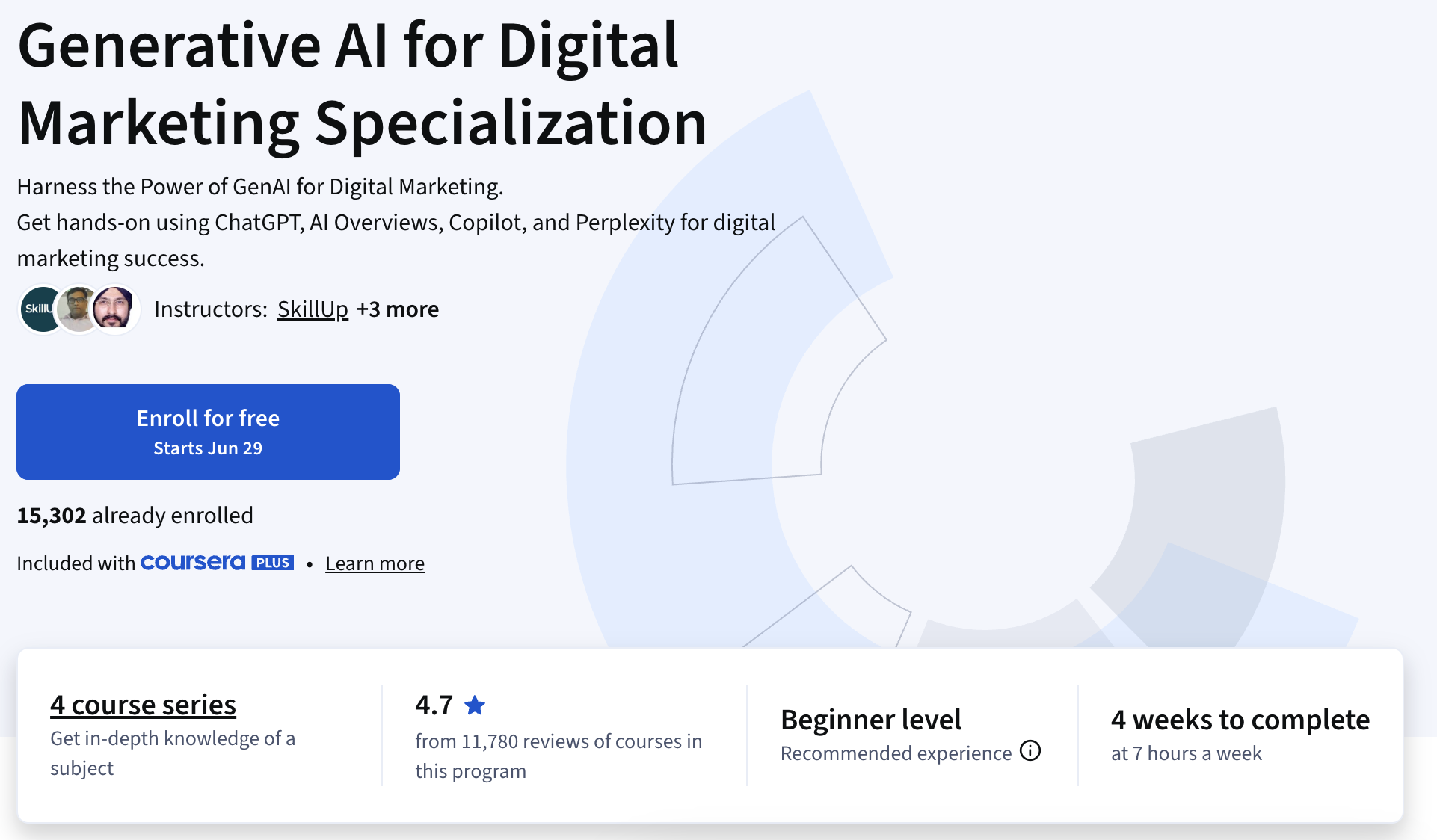
This beginner course goes into how GenAI can help you with creating content, structuring campaigns, and optimizing workflows. It takes around four weeks if you complete seven hours per week.
During the course, you’ll learn how to:
- Hands-on skills using GenAI for digital marketing that enhance creativity, boost productivity, and improve visibility in AI-driven search.
- Generative AI fundamentals and prompt-engineering techniques to craft audience-centric, high-impact marketing content across multiple channels.
- Hands-on experience with GenAI tools to optimize audience segmentation, keyword research, digital advertising, and AI-powered SEO strategies.
- Practical skills in GEO and AI-driven approaches to personalize e-commerce experiences, automate email marketing, and measure content performance.
GenAI and GEO are going to change the game for marketers over the next few years, so figuring out how you can use them for your business is a no-brainer.
AI Courses for Finance Professionals
If you’re working in finance, consider taking AI in Financial Services: Foundations through Future Trends Specialization. This beginner course is run by the highly prestigious Oxford University and takes four weeks to complete if you’re doing 10 hours a week.
During the course, you’ll learn how to:
- Understand core AI technologies, including machine learning and natural language processing, and how they’re transforming financial services.
- Analyse the strategic, ethical, and regulatory implications of Open Finance and consumer data rights.
- Evaluate the role of APIs, platforms, and intelligent systems in driving financial innovation and inclusion.
- Design responsible, data-driven financial products and frameworks for real-world challenges.
This allows you to see what the future of financial services might be while balancing these innovations with changes in consumer rights and data protection. You’ll also receive a certificate from the Saïd Business School, University of Oxford, which is a top-tier school.
AI Courses for Energy and Industry Professionals
If you work in the energy and industry sector, then check out Petroleum Engineering with AI Applications Specialization. Unlike the other specialized AI courses on this list, this one is for the advanced audience.
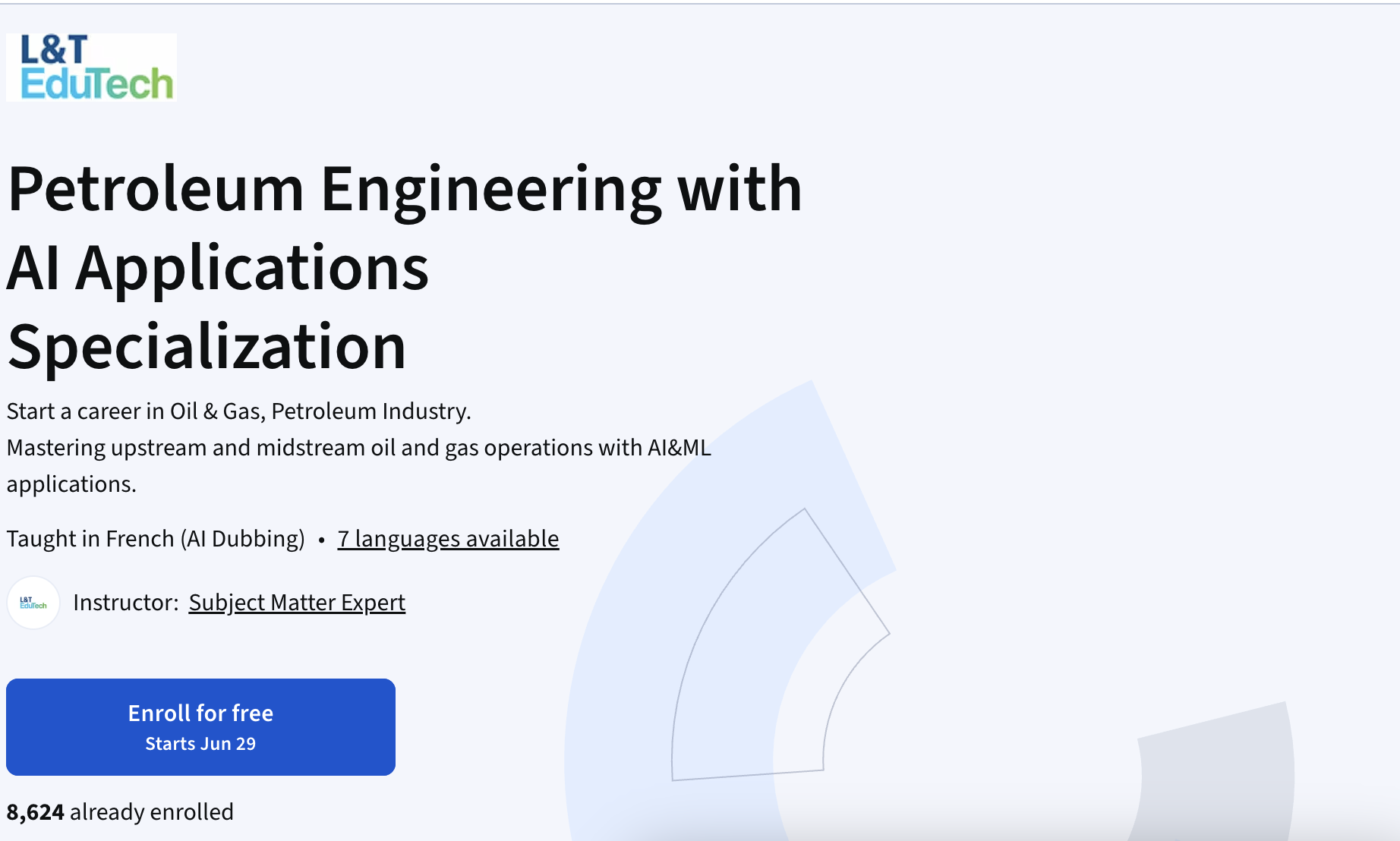
While it takes around four weeks to complete if you do 10 hours per week, it’s not the foundational knowledge that the other options give you. This is highly industry-specific.
During the course, you’ll learn how to:
- AI/ML in seismic data and geomodelling improves reservoir accuracy and hydrocarbon recovery.
- Efficient data handling and AI tech enhance decision-making, predictive maintenance, and monitoring.
- Treating produced water and managing waste/vent systems ensures safety and environmental compliance.
Module titles include Hydrocarbon Exploration and Production, From Wellhead to Refinery: Midstream Oil and Gas Processing, and Utilities, Safety & Environmental Care in Oil & Gas Industry, so this is not your entry-level content.
This is for experienced professionals within the energy industry who are looking to see what AI might be able to do for them to help streamline processes in the future.
AI Courses for Business Analysts
Business analysts are really going to feel the impact of AI insights in the next few years. Get ahead with AI-Powered Business Analysis: Excel, KPIs & GenAI Specialization.
This intermediate-level course is for analysts who already have a foundational grasp of the AI basics but want to get into more specialized uses for the tech.
During the course, you’ll learn how to:
- Apply GenAI tools like ChatGPT to automate business analysis tasks and generate faster insights across multiple industries.
- Build advanced Excel solutions using VBA macros, statistical analysis, and KPI frameworks for data-driven decision making.
- Create impactful data visualizations and reports using AI-powered tools while maintaining ethical AI practices.
This course takes around four weeks to complete if you do 10 hours per week. Interestingly, this course is also taught in English, Arabic, German, Spanish, and French.
Overall, this course gives you a practical grounding of how to use AI to help make deeper insights and handle larger data sets while maintaining ethical lines.
For IT & Technical Career Paths
For IT pros, sysadmins, and anyone eyeing AI infrastructure roles, the AI Infrastructure and Operations Fundamentals course is a great starter option. This is a beginner course run by the chip manufacturing giant, NVIDIA, so it has great tech credentials.
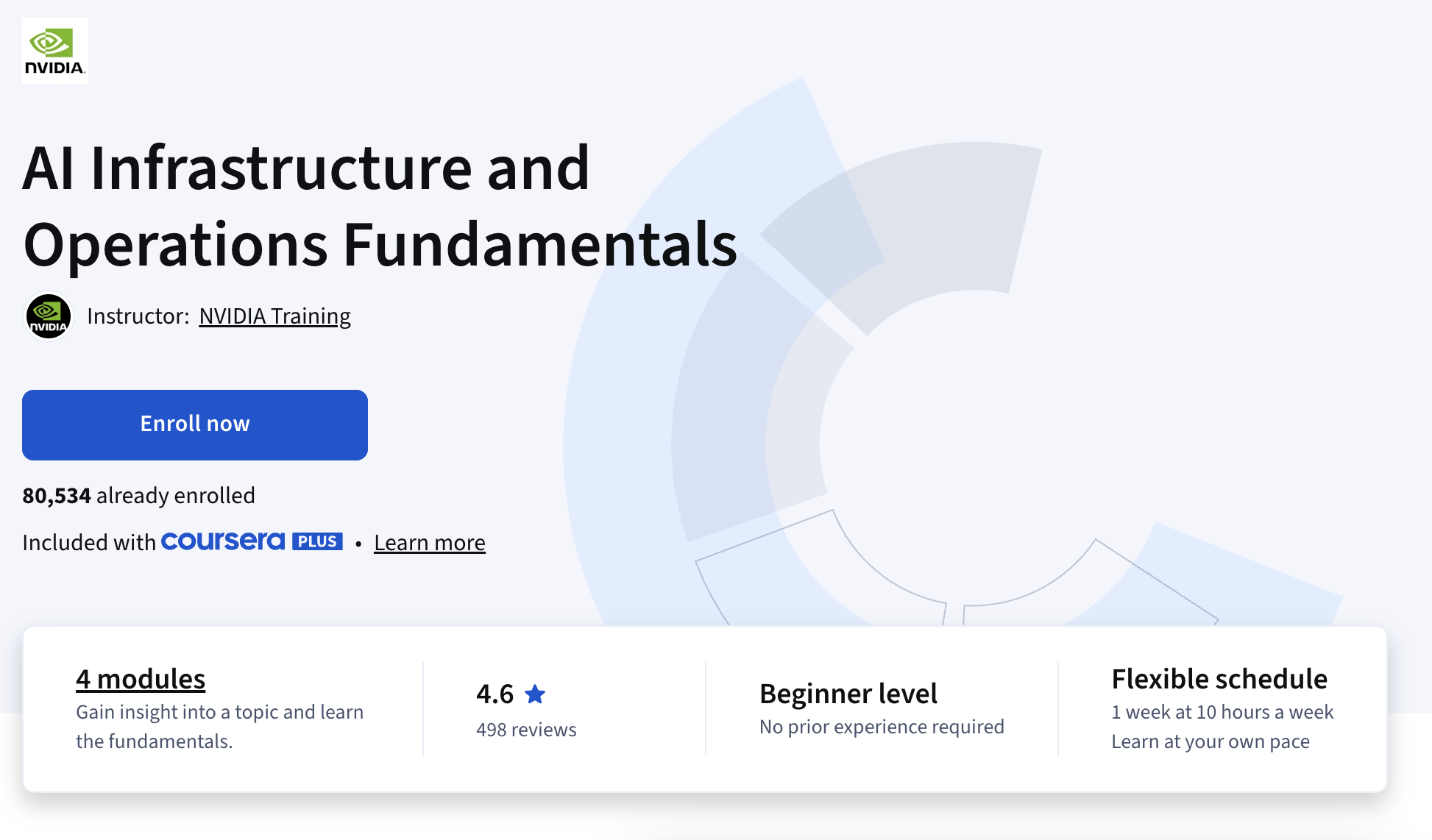
It’s a super short course at just 10 hours total, so it can easily be completed in a week.
During the course, you’ll learn how to:
- Explore diverse applications of AI across various industries.
- Understand concepts like Machine Learning, Deep Learning, training, and inference.
- Trace the evolution of AI Technologies. From its inception to the revolutionary advances brought by Generative AI, and the role of GPUs.
- You will become familiar with deep learning frameworks and the AI software stack.
- Learn about considerations when deploying AI workloads on a data center on-prem, in the cloud, on a hybrid model, or on a multi-cloud environment.
This course is designed for people who work in operations and tech infrastructure who want to know how AI can work in software stacks, data centers, and cloud environments. There are just four modules to this course, one of which is the final quiz, so it’s a quick introduction to AI uses in this industry.
It’s definitely a great course for anyone looking to pivot into a tech role, to show they have basic knowledge of AI in this field.
Ethics, Law & Responsible AI
If you’re looking for a more governing role regarding AI, these are definitely areas for growth. As AI adoption explodes, governance and responsible-AI roles are growing.
People want to know they’re using AI in a positive way that won’t come back to harm them later down the line. So, if you can take a course in the ethics and legal ramifications of using AI, they’ll really differentiate your CV.
Artificial Intelligence: Ethics & Societal Challenges
For an ethical look at AI, check out Artificial Intelligence: Ethics & Societal Challenges. This beginner course takes a week to complete with around 10 hours of work, and gives you the fundamentals of the ethical dilemma of AI.
During the course, you’ll learn about:
- Algorithmic bias and surveillance.
- AI and its role in democracy.
- Artificial consciousness and the “waking up” of AI.
- Responsibility and control when it comes to AI.
This course is run by Lund University, which is a Swedish research university and one of the oldest universities in Europe. While this is undoubtedly a practical course and one of the best AI courses for working professionals, it’s also super interesting from a societal point of view.
AI & Law
For people working in legal fields or looking to see the legal ramifications of using AI, including generative AI with creatives, you need to take this AI & Law course. It’s a beginner course, run by Lund University, and takes two weeks at 10 hours per week.
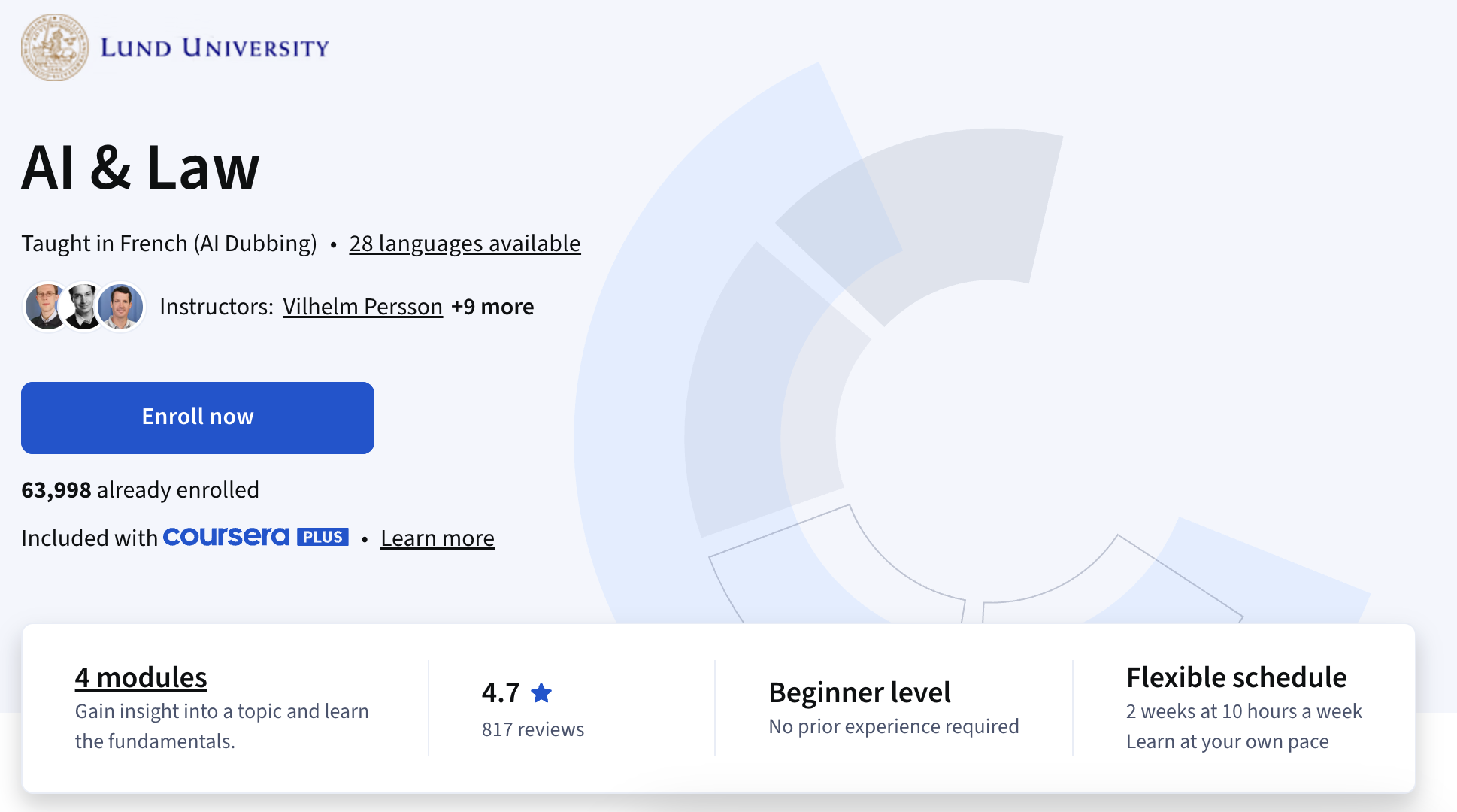
During the course, you’ll learn how to:
- Understand the legal significance of the artificial intelligence software and hardware.
- Understand the impact of the emergence of artificial intelligence on the application and administration of law in the public sector.
- Understand the legal relevance of the use of artificial intelligence software in the private sector.
- Understand the importance of artificial intelligence for selected legal fields, including labour law, competition law, and health law.
This is a course that works for a lot of different industries, covering both public and private sector implications. Nearly every business will have a legal department or firm on retainer to cover itself. If you’re applying for legal or back-office professional roles, such as compliance or HR, this is a great boost to your CV.
Data Privacy, Ethics, and Responsible AI Specialization
If you’re in a role or company that handles any kind of customer data, you should consider Data Privacy, Ethics, and Responsible AI Specialization. This four-week, beginner-friendly course is a must if you’re handling data and want to stay above board when it comes to ethics and corporate responsibility.
During the course, you’ll learn how to:
- Implement ethical frameworks for responsible AI development and deployment in organizational settings.
- Conduct comprehensive rights impact assessments and ensure compliance with data protection regulations.
- Design effective user education programs and security measures for AI systems and data privacy protection.
As AI in the workplace becomes more prevalent, data privacy and ethics courses, like this, are going to become essential. Stay ahead of the curve, and you’ll likely be in a prime position for a role in HR, compliance, or anything where customer data is concerned.
Comparison Table
If you want to see which AI course is right for you at a glance, here’s a handy comparison table to help you out.
| Course | Best For | Level |
| Introduction to AI | Complete beginners | Beginner |
| AI Foundations for Everyone | Non-technical professionals | Beginner |
| Agentic AI for Leaders | Managers and founders | Beginner-Intermediate |
| AI in Healthcare | Healthcare workers | Intermediate |
| AI Education for Teachers | Teachers and educators | Beginner |
| Applied AI for Engineers & Scientists | Engineers and scientists | Intermediate |
| Generative AI for Digital Marketing | Marketers and creators | Beginner |
| AI in Financial Services | Finance professionals | Beginner-Intermediate |
| Petroleum Engineering with AI | Energy sector | Intermediate |
| AI-Powered Business Analysis | Analysts, project managers, ops | Beginner-Intermediate |
| AI Infrastructure & Operations | IT professionals | Beginner-Intermediate |
| AI: Ethics & Societal Challenges | Everyone | Beginner |
| AI & Law | Legal, compliance, and HR | Beginner |
| Data Privacy, Ethics & Responsible AI | Data handlers and leads | Intermediate |
While many on this list are industry-specific, plenty are more open and work on a fundamental level. If you’re not sure which specific industry you want to work in, taking these courses gives you a well-rounded view of what you might be going into.
FAQ Section
So, now that you know the best AI courses for working professionals in your specialization, let’s round off this guide with a few frequently asked questions.
Yes, you probably do need to learn AI for your job. If you want to stay relevant in the age of AI, upskilling is a valuable thing to do. AI is here, whether you love it or hate it, and it’s going to have a role in the workplace. Stay ahead of the curve and learn how it can help your role.
Yes, AI certifications are worth it. 95% of organizations now use AI skills as a hiring factor, and 65% of businesses have had to abandon AI projects due to a lack of in-house skills.
If you’re looking for an AI course for beginners, consider Introduction to Artificial Intelligence or AI Foundations for Everyone Specialization. These are both fundamental AI courses online that help you learn the basics before getting into your industry specialism.
Yes, you can learn AI without a tech background. Soon, it’s likely that everyone will need AI skills for work, just the same as we need email and Microsoft skills now. There are basic AI courses online for all specializations, including legal, HR, education, healthcare, and more.
How long it takes to complete an AI course on Coursera depends on the course, but most can be done in under a month. Some are as short as 10 hours and can be done in a couple of days.
Yes, Coursera AI courses are free on the audit tier. However, if you want graded quizzes and a shareable certification at the end of the course, you have to pay.
The AI skills that employers want in 2026 vary depending on the role and the industry. A basic understanding of how AI works, how it can streamline admin tasks, or how it can build leads is all highly valuable, as are AI courses around the ethics of AI.
Whether or not AI will replace your job depends on your role and the business. Figuring out how to upskill in AI gives you a boost that shows you can work with AI and understand it, which can give you an edge if you’re in a role that’s at risk of being replaced.
Conclusion
So, if you’re looking for the best AI courses for working professionals, there are plenty of great ones on Coursera to choose from. Remember to pick a course based on your seniority, your base knowledge of AI, and your specialization.
I’d encourage you to pick just one course and start this week. You can do them on your own time and at your own pace, so they’re perfect for train commutes, a couple of hours in the evening, or if you have a slow day in the office. AI looks like it’s here to stay, so you need to be prepared!
If you want to find out more about getting a job in tech, at home or overseas, check out my Tech Career Quiz and my guides, such as:
- The 17 Highest-Paying Non-Technical Jobs in Tech
- How to Get into the Tech Industry with No Experience
- How to Find a Job Abroad
- 14 of the Easiest Tech Jobs to Get Into
Vanessa Wachtmeister is a travel tech professional and the creator of the wealth & wanderlust platform, Wander Onwards. Vanessa is originally from Los Angeles, California, she is a proud Chicana, and she has been living abroad for the last 9 years. Today, she helps people pursue financial and location independence through her ‘Move Abroad’ Master Class, financial literacy digital products, and career workshops.